Direct answers tailored to the concerns of your technical and business leadership.
What happens if Continuuly's control plane experiences an outage?
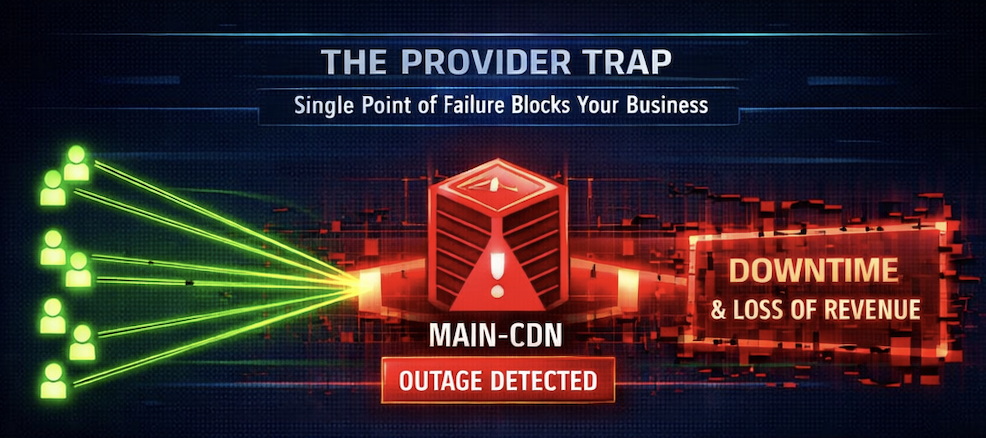
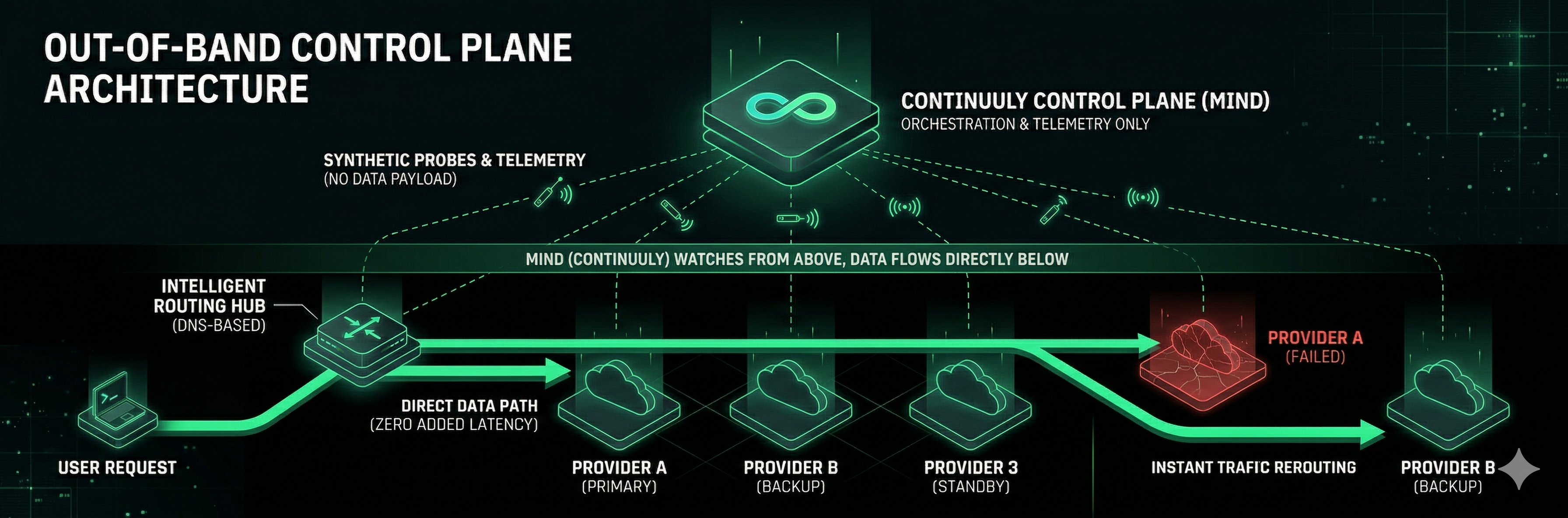
We operate a globally distributed, anycast-backed infrastructure. In the highly unlikely event of a total control plane failure, we utilize a fail-open design. Client DNS requests seamlessly fall back to the last known good configuration, meaning your traffic continues to route to your primary provider without interruption. You are never worse off.
Does implementing this layer introduce vendor lock-in?
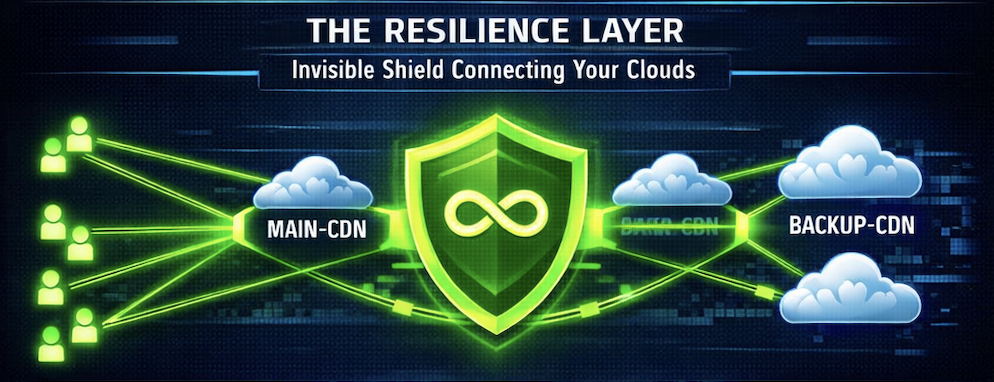
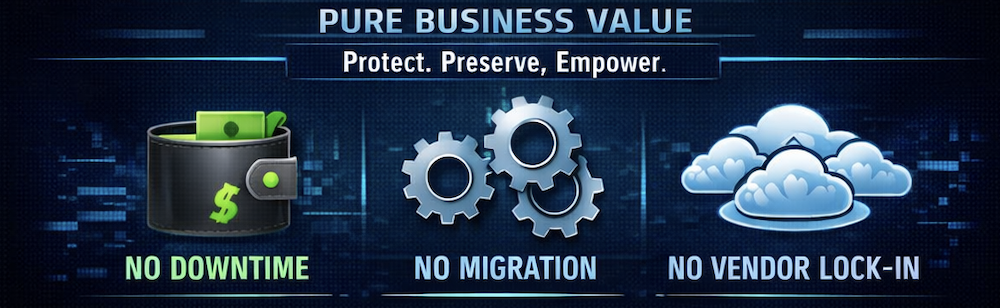
No. Continuuly acts strictly as an out-of-band orchestration layer. You maintain direct relationships and configurations with your underlying infrastructure providers. If you decide to switch edge providers or remove Continuuly entirely, you simply revert your DNS records.
How does this align with our existing multi-cloud strategy?
It operationalizes it. Many enterprises have a multi-cloud strategy on paper but struggle with active-active routing. Continuuly provides the missing intelligent routing layer, allowing you to seamlessly distribute traffic across heterogeneous environments without building custom routing engines.
Does this require changes to our edge compute or serverless functions?
Absolutely not. Your edge logic, serverless workers, and caching rules remain exactly where they are—on your primary and secondary providers. Continuuly operates at the traffic-steering level, completely agnostic to your edge compute workloads.
How do you differentiate between a localized ISP blip and a global provider outage?
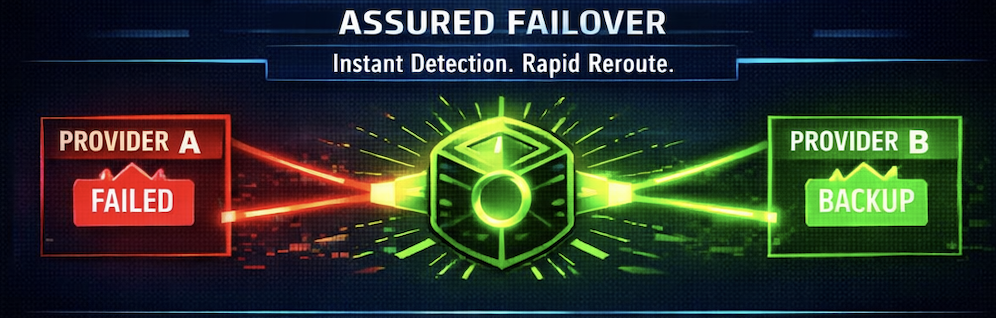
Our global observability engine triangulates data from a vast network of synthetic probes. We require multi-region consensus based on extensive testing and experience before triggering a failover, effectively eliminating false positives caused by isolated network noise.
Do you process our users' Personally Identifiable Information (PII)?
Never. Our zero-in-path architecture ensures your payload data flows directly between the end-user and your edge providers. We do not proxy, inspect, or store any user traffic, completely isolating us from your PII scope.
Do we need to share our SSL/TLS private keys with Continuuly?
No. Because we operate at the control plane and do not terminate traffic, your SSL/TLS certificates remain exclusively on your own infrastructure. Your end-to-end encryption boundaries are entirely preserved.
How does this impact our WAF and DDoS mitigation layers?
Your security posture remains intact. You configure your WAF and DDoS rules on your respective edge providers. When Continuuly triggers a failover, traffic is routed to your secondary provider, ensuring continued protection against network and application layer attacks.
How does Continuuly help with our compliance requirements?
By never touching your payload data, Continuuly fundamentally simplifies your compliance audits. We act as a highly secure, isolated routing mechanism, removing ourselves from the chain of custody for sensitive data.
How secure is the connection between Continuuly and our infrastructure?
We utilize strictly read-only access with granular, least-privilege scoping. We only require the ability to read health metrics and update routing paths safely.
How does the ROI compare to building internal multi-provider redundancy?
Building an internal active-active failover system requires significant engineering resources and continuous maintenance. Continuuly delivers enterprise-grade redundancy instantly, turning a massive CapEx project into a predictable OpEx subscription.
Are there hidden bandwidth or data egress costs?
None. Because we are an out-of-band control plane, we do not proxy your traffic. You pay no bandwidth markup and no data egress fees to Continuuly. You only pay for the intelligence and routing queries.
Do we need to double our infrastructure spend for the secondary provider?
No. Most secondary network providers offer pay-as-you-go or standby tier pricing. You only incur significant costs on your secondary network when a failover occurs—which is exactly when you are saving your otherwise lost revenue.
How do you price your service?
Our pricing is predictable and transparent, based on query volume and monitored endpoints, not on your payload size. This ensures your costs do not unpredictably spike during high-traffic events or volumetric attacks.
How does this impact our operational risk profiles?
By guaranteeing higher availability, Continuuly mitigates the risk of costly SLA breaches with your enterprise clients. Furthermore, provable business continuity architectures can often be leveraged to negotiate better premiums on operational risk insurance.
Will Continuuly add latency to our checkout process?
Absolutely no added latency. We do not add any network hops to your users' requests. Once the optimal path is resolved, the user communicates directly with your edge infrastructure, ensuring your site speed remains blazing fast.
Will users experience broken sessions during a failover?
No. Our synthetic probes detect provider degradation and trigger rerouting incredibly fast, often before the user's browser even registers a connection timeout. The transition to the secondary provider happens transparently behind the scenes.
Does this have an impact on SEO and Core Web Vitals?
Yes, a highly positive one. Search engines heavily penalize sites that return server errors or experience timeouts. By guaranteeing high availability and preventing downtime, you protect your crawl budget and maintain your hard-earned search rankings.
Can this handle massive traffic spikes like major sales events?
Absolutely. Our control plane scales dynamically to handle immense routing query volumes. Continuuly acts as your invisible safety net precisely when your primary networks face the most strain.
How much effort is required to implement this?
Implementation is extremely fast and requires no code changes. You simply update your edge DNS to point to our resilient layer and deploy our standard configuration.
How is the routing logic managed and updated?
It is managed entirely through our unified control plane, allowing your team to update global routing policies seamlessly without touching the underlying edge infrastructure.
Will this create more alert fatigue for the on-call team?
It drastically reduces it. Instead of waking up in the middle of the night to manually patch a route during an outage, Continuuly handles the failover automatically. Your team receives a notification and can review the incident during normal business hours.
How customizable are the health checks and failover thresholds?
Highly granular. You can configure probe frequency, define complex consensus thresholds, and set specific parameters based on extensive testing, historical data, and your specific operational risk appetite.